
Creating a vegetable garden can be one of the most rewarding endeavors for any gardening enthusiast. Not only does it provide fresh produce, but it also offers a unique opportunity to design a space that reflects your personal style and enhances your outdoor living experience. With a little creativity and planning, your vegetable garden can become a stunning focal point in your landscape.
In this article, we’ll explore 12 inspiring vegetable garden design ideas that cater to various tastes and spaces. Whether you have a sprawling yard or a small urban balcony, there’s a design concept that will elevate your gardening game. From raised beds to vertical gardening, these ideas will help you cultivate a productive and aesthetically pleasing environment that you can enjoy throughout the growing season and beyond.
1. Embrace a Lush Cottage Garden Style
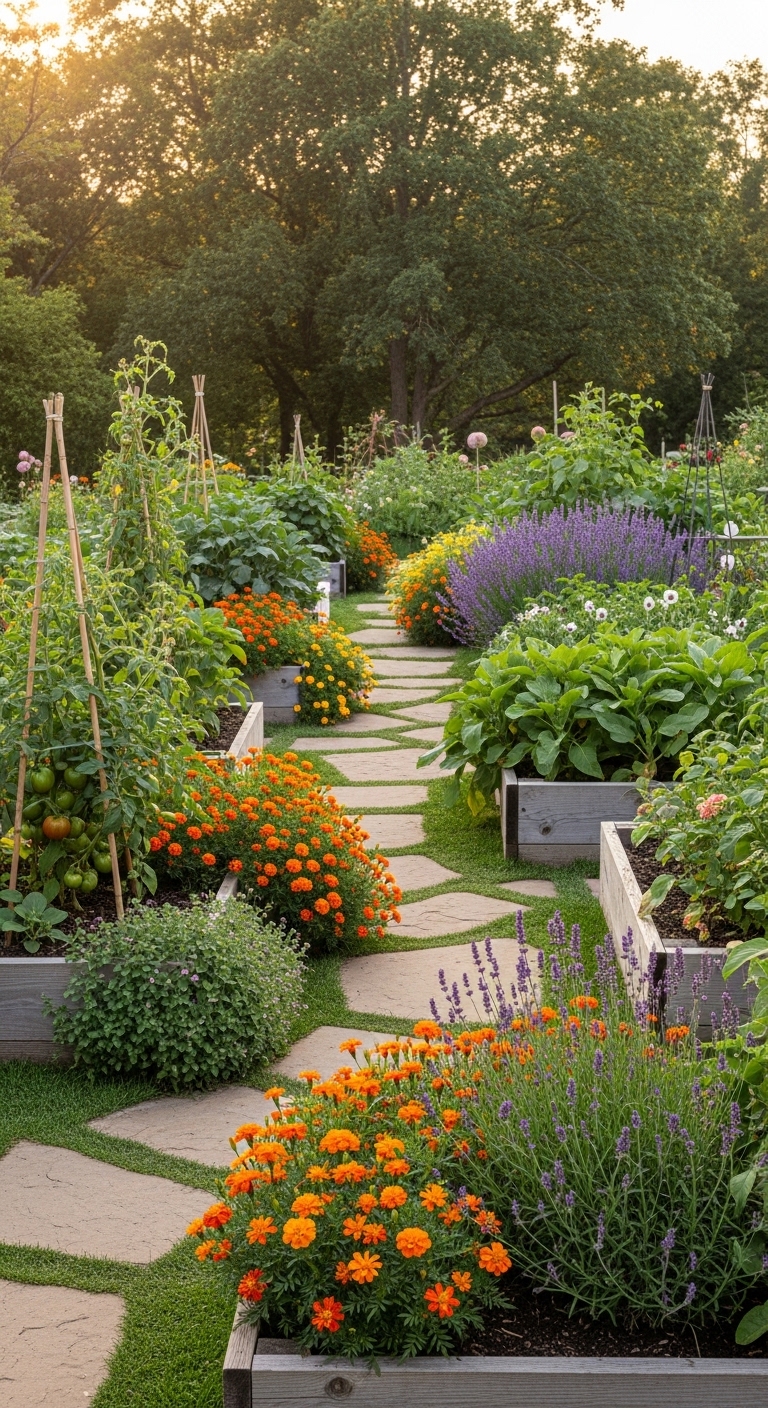
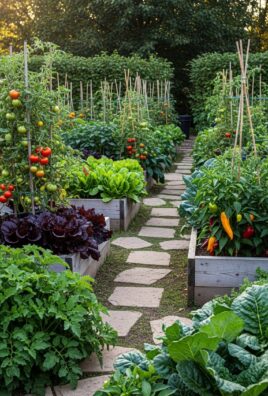
A cottage garden style is characterized by its abundance and informal layout, creating a charming and inviting atmosphere. This design often incorporates a variety of vegetables intermingled with flowers, herbs, and ornamental plants, allowing for a beautiful blend that attracts pollinators while providing fresh produce. Think of planting vibrant marigolds alongside your tomatoes or fragrant lavender near your zucchini.
To create a lush cottage garden, consider using raised beds and pathways to define your space while allowing for a natural, organic feel. Using rustic materials such as reclaimed wood or natural stone can enhance the charm of your garden. Additionally, incorporating trellises adorned with climbing vegetables like peas or beans can add vertical interest and maximize your growing space.
Remember to plant in layers, placing taller plants at the back and shorter ones in front for an appealing visual effect. This style not only looks picturesque but is also practical, as it allows for easy access to your vegetables while creating a delightful sensory experience in your garden.
2. Maximize Space with Vertical Gardening
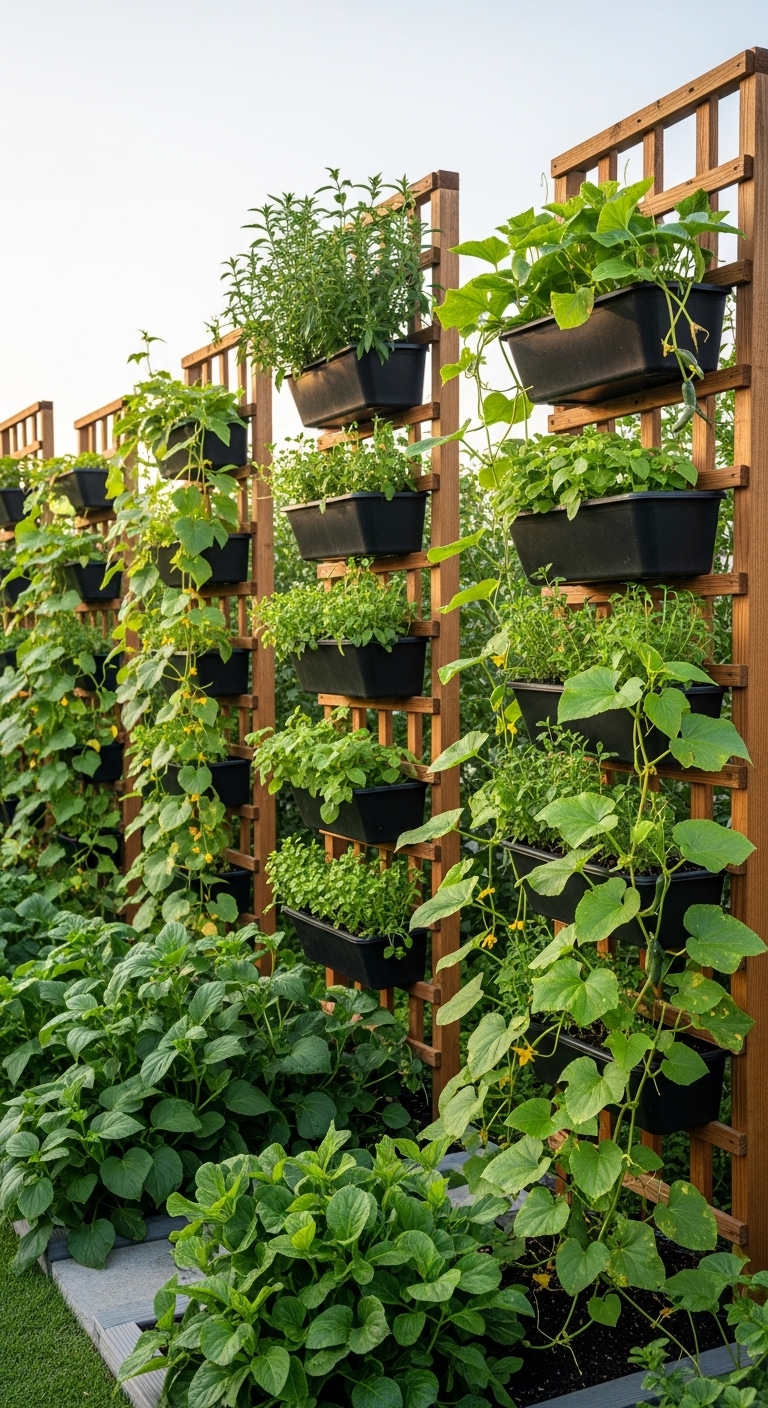
Vertical gardening is an innovative solution for those with limited space but a passion for growing their own vegetables. By utilizing vertical structures such as trellises, wall planters, and hanging pots, you can create a stunning green wall that not only saves space but also adds a unique aesthetic appeal to your outdoor area. This technique is perfect for growing climbing plants like cucumbers, tomatoes, and pole beans.
When designing your vertical garden, consider the orientation of your space and the amount of sunlight it receives throughout the day. Position your vertical planters in a way that allows for optimal light exposure, ensuring your plants thrive. Using a mix of different plant types can create visual interest; for example, combine leafy greens with colorful flowering vines for a dynamic display.
Maintenance is key to a successful vertical garden. Regular watering and monitoring for pests are essential, as vertical setups can sometimes dry out quicker than traditional gardens. By incorporating drip irrigation or self-watering systems, you can simplify maintenance and ensure your plants stay healthy and productive.
3. Create a Zen Vegetable Garden Retreat
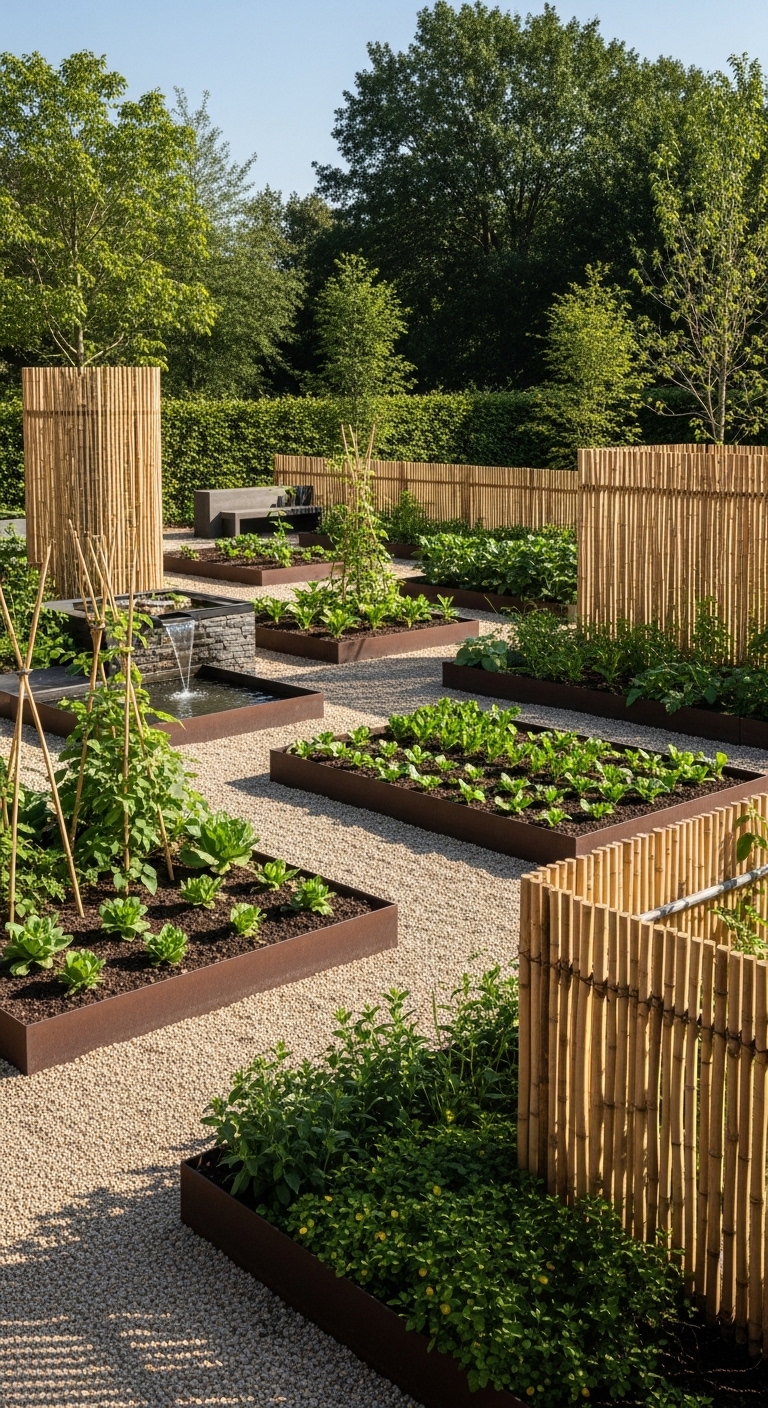
For those seeking a tranquil gardening experience, a Zen vegetable garden can provide both beauty and serenity. This design focuses on minimalist aesthetics, clean lines, and natural materials, creating a peaceful environment that encourages mindfulness while tending to your plants. Incorporate elements such as gravel pathways, bamboo fencing, and strategically placed stones to enhance the calming atmosphere.
To achieve a Zen garden feel, consider arranging your vegetables in geometric patterns or raised beds that are neatly organized. Plant varieties that not only provide food but also have unique textures and colors, such as purple carrots, red leaf lettuce, and vibrant radishes. Incorporating herbs like basil and mint adds fragrance, enhancing the sensory experience.
Water features such as small ponds or fountains can further elevate the tranquility of your garden. The sound of flowing water creates a soothing backdrop, making your gardening time a meditative escape. Regular maintenance ensures that your Zen garden remains a place of peace and productivity, inviting you to unwind and connect with nature.
4. Incorporate Edible Landscaping
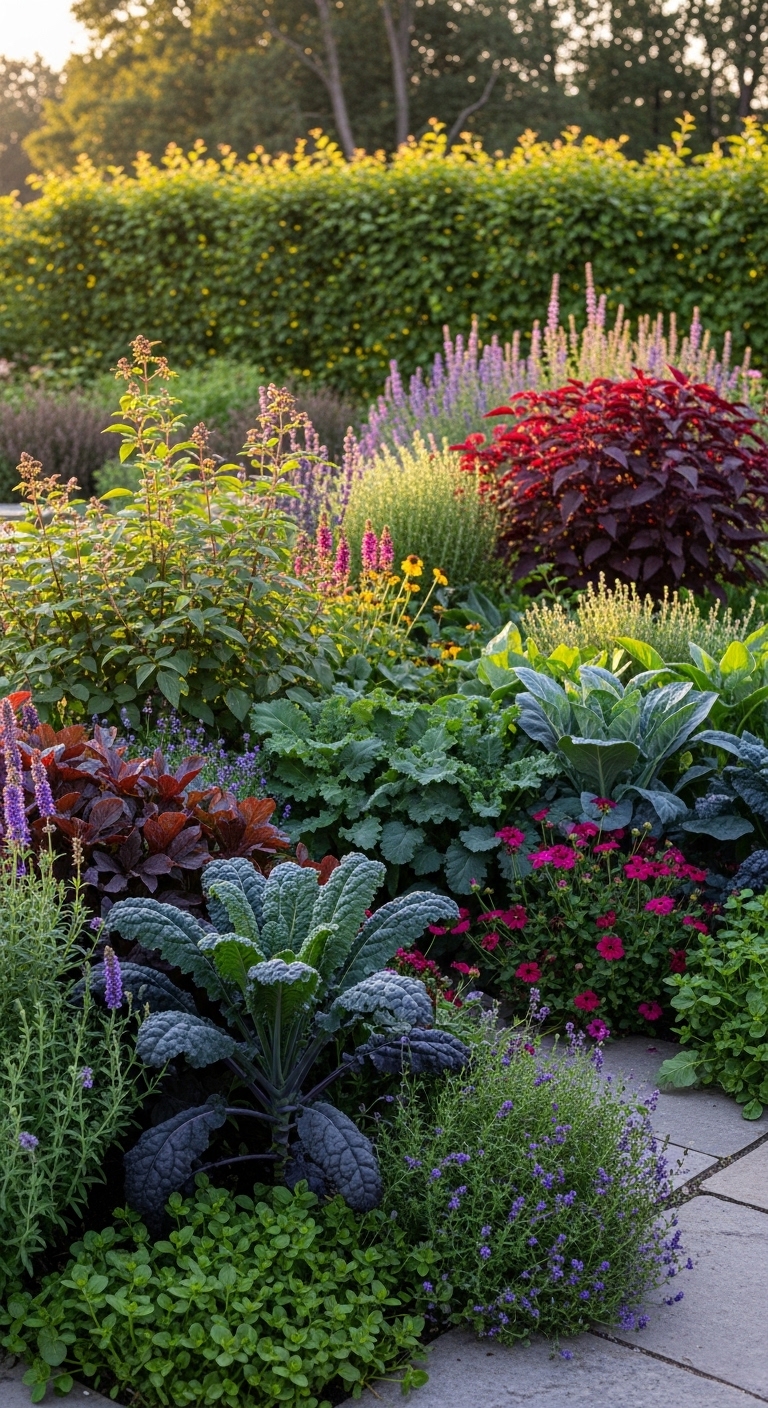
Edible landscaping blends beauty with functionality, allowing you to create a garden that is both visually appealing and productive. This design concept integrates vegetables, fruits, and herbs into traditional ornamental landscapes, making your yard a source of nourishment without sacrificing aesthetics. Imagine a flowering garden bed that includes kale, berry bushes, and aromatic herbs alongside ornamental flowers.
To start, choose plants that complement each other in terms of height, color, and texture. For example, plant vibrant peppers amid ornamental grasses or use flowering herbs like chives and oregano as colorful border plants. This not only enhances the visual appeal but also attracts beneficial insects, improving pollination and pest control.
Maintaining an edible landscape requires thoughtful design and regular care. Ensure that your plants receive adequate sunlight and water, and consider interplanting to create a diverse ecosystem. The result is a beautiful garden that delights the senses and provides fresh produce right from your backyard.
5. Design a Raised Bed Paradise
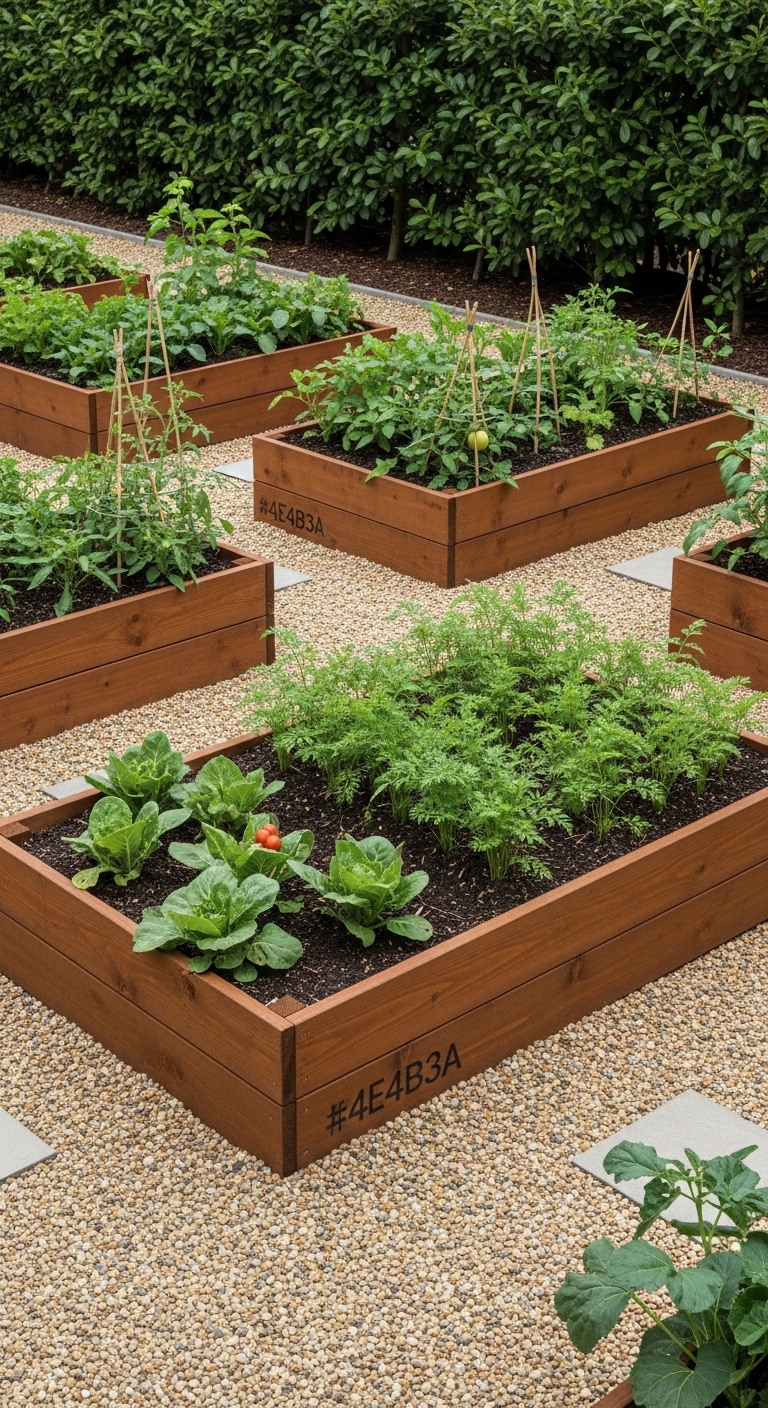
Raised bed gardening is an excellent choice for those looking to maximize yield while minimizing effort. This approach allows for improved drainage, enhanced soil quality, and easier access to plants, making it ideal for both novice and experienced gardeners. When planning your raised bed garden, consider the layout—rectangular beds, hexagons, or even curved designs can add visual interest and functionality.
Choosing the right materials for your raised beds is crucial. Cedar and redwood are popular options due to their natural resistance to decay. Line your beds with landscape fabric to prevent weeds while allowing for drainage. Fill them with a mix of high-quality soil and compost to provide your plants with the nutrients they need to thrive.
Incorporate companion planting strategies to maximize your garden’s success. For instance, growing marigolds alongside vegetables can help deter pests, while interspersing herbs can enhance flavor and attract beneficial insects. A well-maintained raised bed garden not only produces a bounty of vegetables but also creates a stunning focal point in your outdoor space.
6. Add a Touch of Whimsy with a Fairy Garden
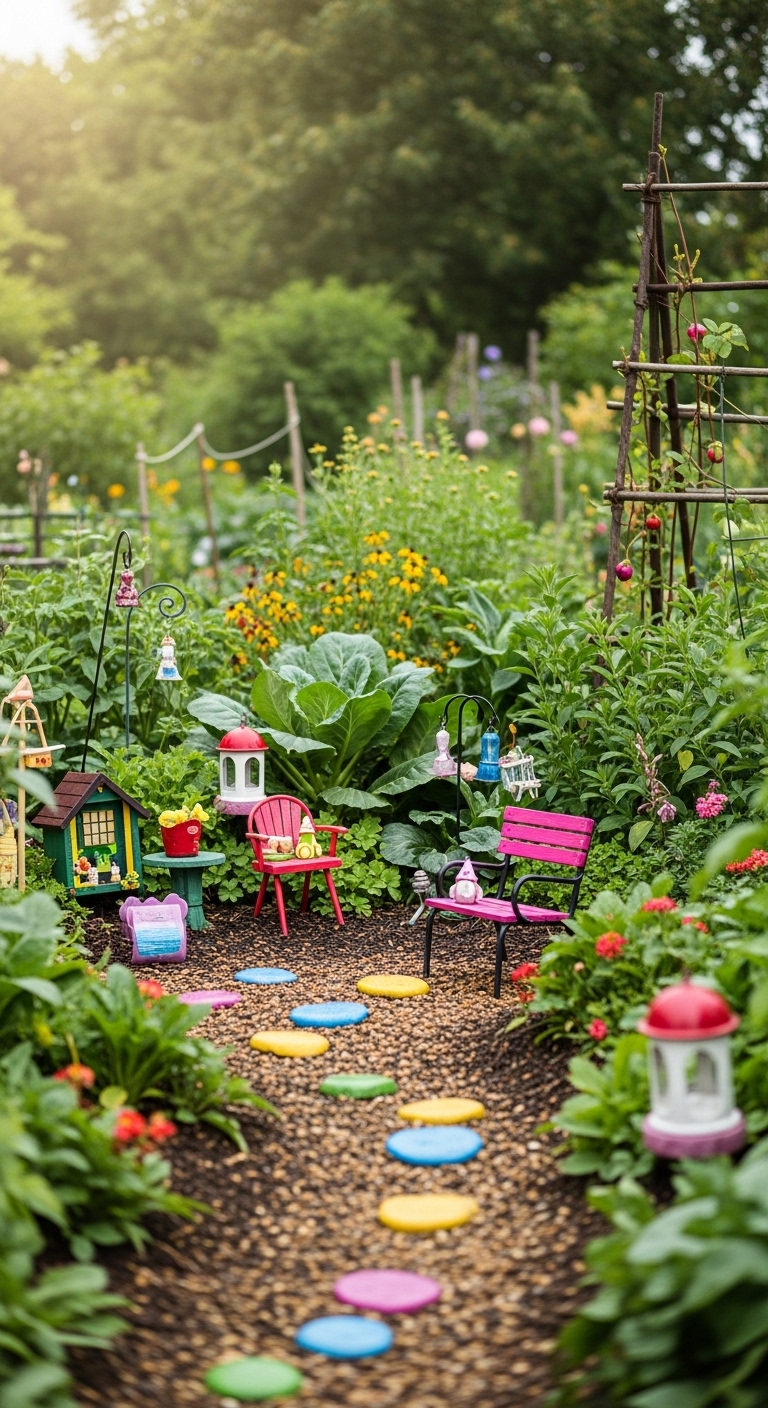
Creating a fairy garden within your vegetable patch can add an imaginative and playful element to your gardening experience. This whimsical design captures the spirit of childhood and encourages creativity while still allowing for the cultivation of edible plants. Incorporating miniature decorations, tiny furniture, and charming pathways alongside your vegetables makes for a delightful gardening adventure.
To design your fairy garden, start by selecting a small area within your vegetable garden to create a designated space for whimsical elements. Use colorful stones or pebbles to outline pathways and plant small edible flowers or herbs like basil and thyme that can double as both decor and produce. Tiny decorative items such as fairy houses or miniature fences can enhance the enchanted atmosphere.
Maintaining a fairy garden involves regular care and attention, ensuring that the plants thrive while keeping the whimsical elements intact. This playful approach not only brings joy to your gardening experience but also sparks the imagination of children and adults alike, fostering a deeper connection with nature.
7. Experiment with Companion Planting
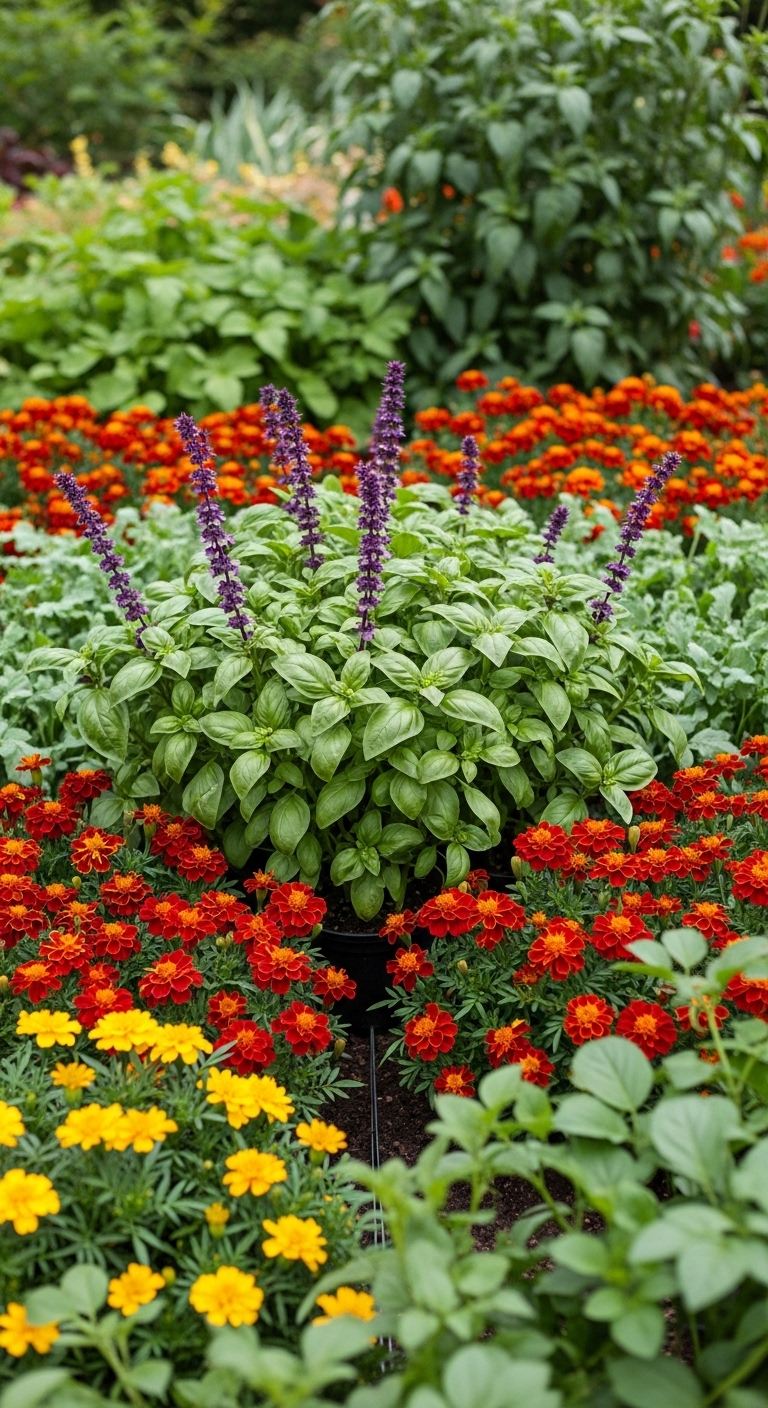
Companion planting is a gardening technique that involves growing different plants in proximity for mutual benefit. This design strategy can enhance growth, deter pests, and improve flavor, making it an essential consideration for any vegetable garden. By pairing compatible plants, you can create a thriving ecosystem within your garden.
For example, planting basil near tomatoes can improve the flavor of the tomatoes while repelling pests. Similarly, incorporating marigolds can deter nematodes and attract beneficial insects. Planning your garden layout with companion planting in mind can optimize your space and yield.
Consider using a grid layout to organize your companion plants effectively. This method allows for easy access and maintenance while providing a visually appealing arrangement. With careful planning and observation, you can create a productive vegetable garden that works in harmony with nature.
9. Create a Vertical Garden Wonderland
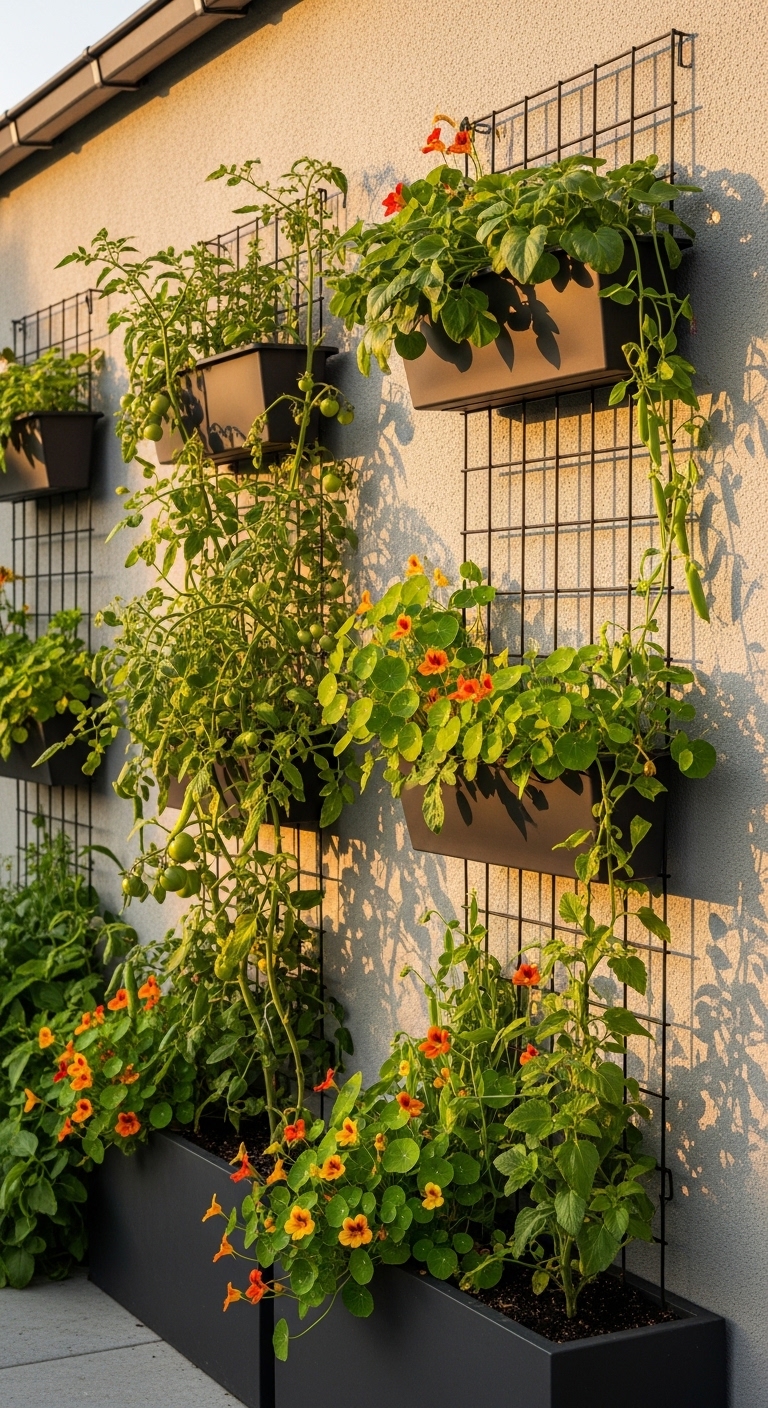
Vertical gardens are an innovative way to maximize space while adding a stunning visual element to your vegetable garden. By utilizing wall-mounted planters or trellises, you can grow plants upwards, making them perfect for small yards or urban settings. Start with climbing vegetables like peas, tomatoes, and cucumbers, which thrive when trained on vertical supports.
Consider incorporating a variety of textures and colors by mixing herbs and flowering annuals alongside your vegetables. For instance, trailing nasturtiums can add beautiful splashes of color while being edible. Use materials like repurposed wood, metal grids, or even plastic planters to create your vertical garden structure.
Ensure to have proper irrigation in place, as vertical gardens can dry out quickly. Drip irrigation systems or self-watering pots can help maintain soil moisture levels. Regularly pruning and harvesting your crops will also encourage healthy growth and maintain the aesthetic appeal of your vertical garden.
10. Utilize a Permaculture Garden Design
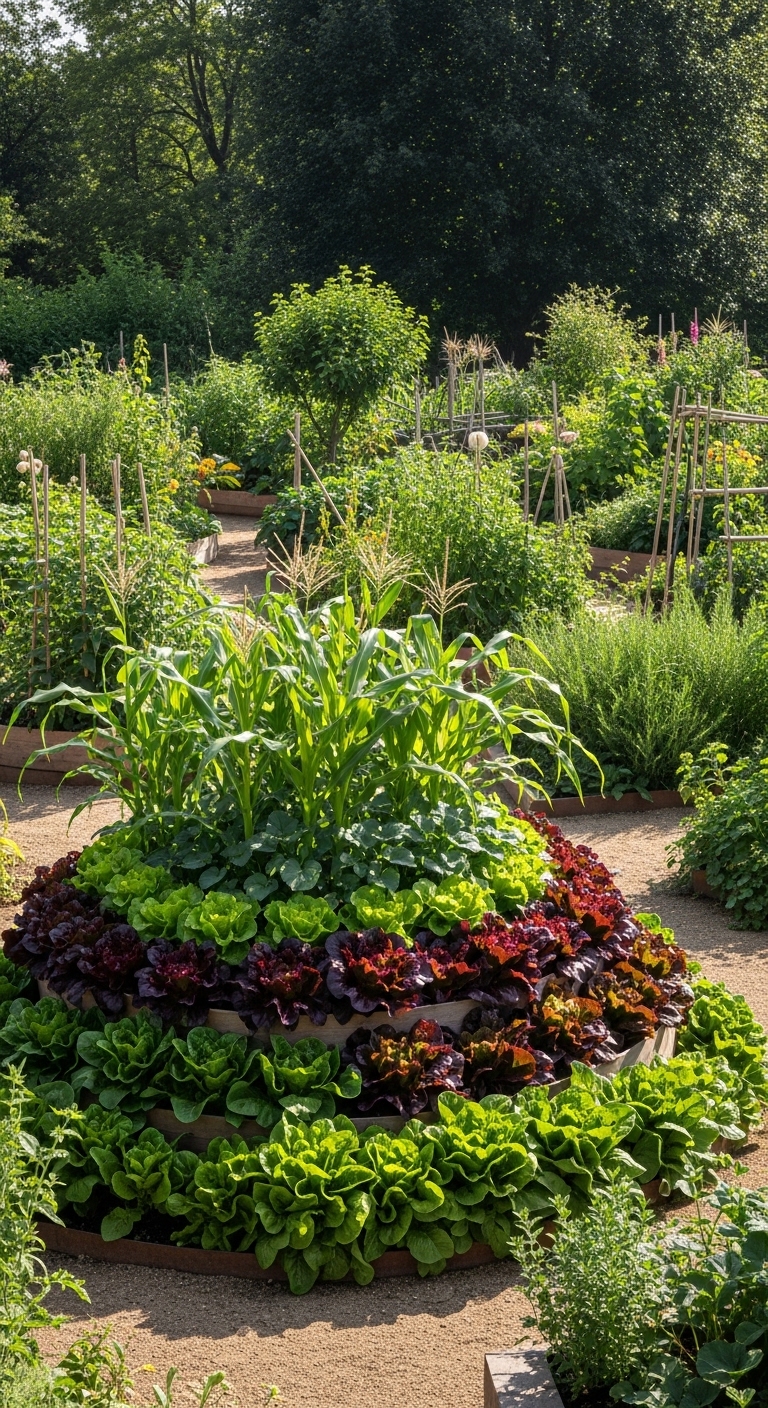
Permaculture gardening is a sustainable approach that mimics natural ecosystems, and it’s perfect for anyone looking to create a flourishing vegetable garden. This design involves strategic planning, where plants are grouped according to their needs and benefits to one another. Start by observing your space and identifying sun patterns, wind directions, and water flow.
In a permaculture garden, consider layering your crops; place taller plants that provide shade, like corn, next to shorter ones that require partial sunlight, such as lettuce. Incorporate perennials like asparagus and rhubarb, which will provide harvests year after year without needing to be replanted. Using mulch and compost will also enhance soil quality and promote beneficial microorganisms.
Create zones within your garden based on usage, such as a herb spiral or a fruit tree guild. This not only adds visual interest but also encourages biodiversity and pollinator activity. Implementing permaculture principles will lead to a self-sustaining garden that flourishes with minimal intervention.
11. Incorporate a Mediterranean-Inspired Garden
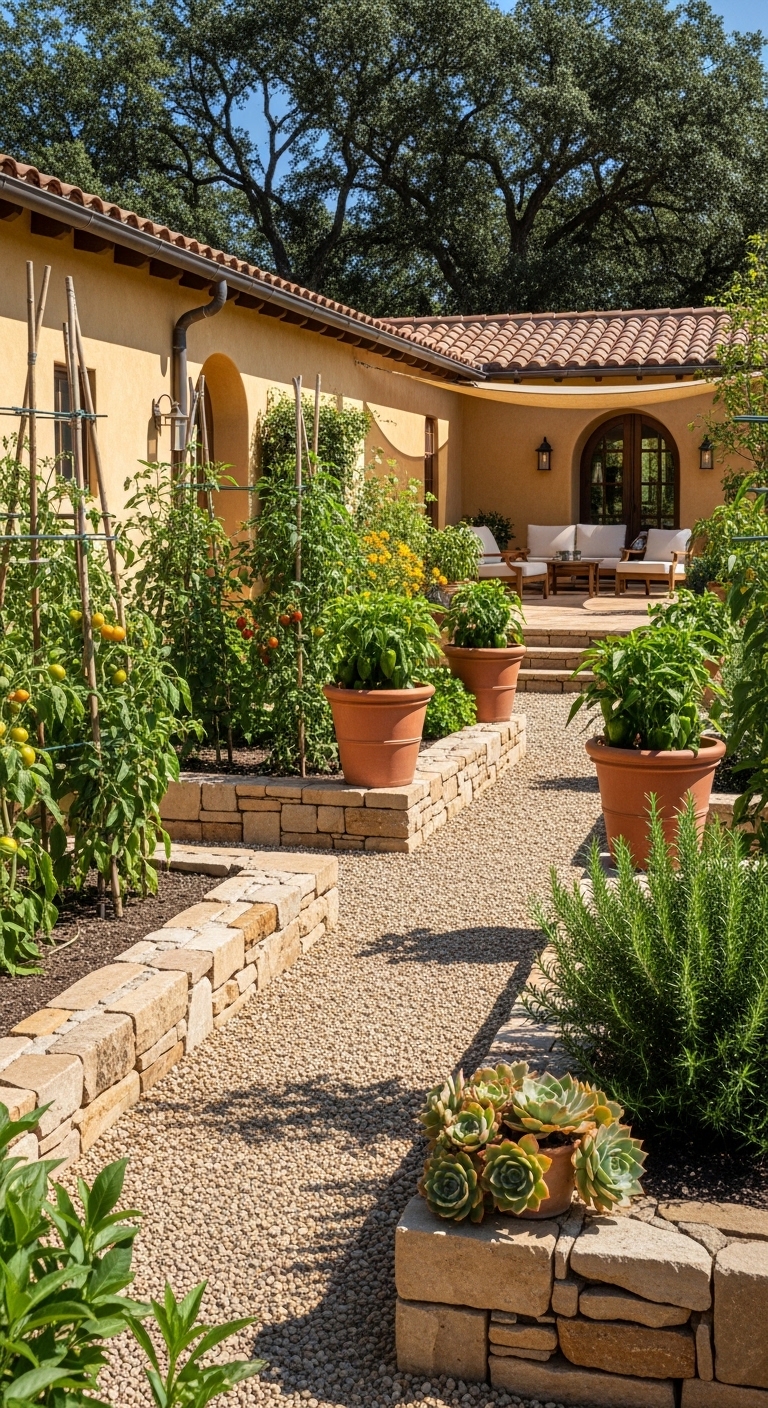
A Mediterranean-inspired vegetable garden combines beauty and practicality, perfect for those in warmer climates. This design focuses on drought-resistant plants and herbs, which thrive in sunny conditions and require less water. Start with staples like tomatoes, peppers, and eggplants, coupled with vibrant herbs such as rosemary, thyme, and oregano, which can enhance your cooking.
Create raised beds with terracotta pots or stone borders to add to the Mediterranean aesthetic. Utilize gravel paths to improve drainage and reduce water retention around your plants. Consider adding a pergola or trellis to grow climbing vegetables and provide shaded lounging areas to enjoy your garden.
Integrate native plants alongside your vegetables to create a harmonious ecosystem that attracts beneficial insects. Succulents and ornamental grasses can fill in spaces and enhance visual interest, while also providing a stunning contrast to your vibrant produce. This style promotes sustainability while offering a relaxing retreat in your outdoor space.
12. Transform Your Space with a Circular Garden Design
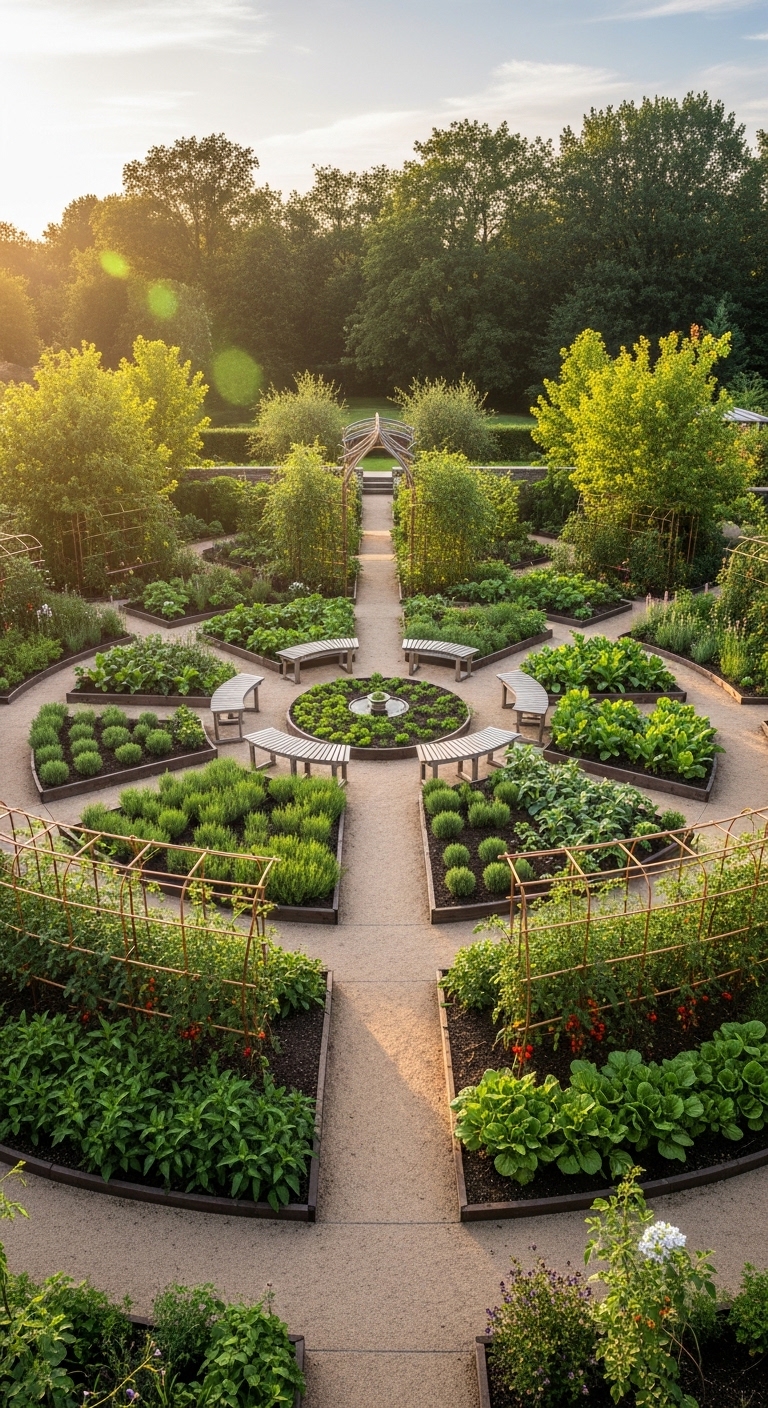
Circular garden designs offer a unique and aesthetic approach to vegetable gardening, breaking away from traditional rectangular layouts. This method promotes harmony and balance, and it allows for easy access to plants from all sides. Start your circular garden by selecting a central feature, such as a small tree, fountain, or decorative sculpture, that serves as the focal point of your design.
Surround this central feature with raised beds or circular plots that can be divided for different vegetable types. For instance, you can plant herbs in the inner circle, followed by greens and tomatoes in the outer circles, ensuring efficient use of space and sunlight. The circular shape not only enhances the visual appeal but also creates microclimates that can benefit various plants.
Incorporate pathways that radiate outward from the center, allowing for easy access to every section of your garden. Adding circular seating elements will provide a perfect spot to relax and enjoy your handiwork. This design is not only practical but also creates a stunning landscape that can be admired from all angles.
Frequently Asked Questions
What is the best location for a vegetable garden?
The best location for a vegetable garden is a spot that receives at least 6-8 hours of direct sunlight each day. Sunlight is essential for the growth of most vegetables, helping them produce energy through photosynthesis. Choose a location with good drainage to prevent water pooling, which can lead to root rot and other issues.
Additionally, consider the proximity to a water source for easy irrigation. If you plan to have a larger garden, ensure it’s accessible for maintenance and harvesting. Avoid areas with heavy shade from trees or buildings, as well as spots that are prone to flooding or high winds.
How often should I water my vegetable garden?
Watering frequency for your vegetable garden can vary depending on the climate, soil type, and the specific needs of your plants. Generally, it’s advisable to water deeply and less frequently, aiming for about 1 to 1.5 inches of water per week. This encourages deep root growth and helps plants withstand dry spells.
In hot or windy conditions, you may need to increase the frequency of watering. A good practice is to check the soil moisture by digging a small hole; if the soil feels dry an inch below the surface, it’s time to water. Additionally, using mulch can help retain moisture and reduce the need for frequent watering.
What are some tips for pest control in vegetable gardens?
Effective pest control in vegetable gardens starts with preventive measures. Introduce beneficial insects like ladybugs and lacewings that feed on common pests. Additionally, rotating your crops each season can help prevent pest infestations.
If pests do appear, consider using organic methods such as neem oil or insecticidal soap, which are less harmful to beneficial insects and the environment. Hand-picking larger pests like caterpillars and beetles can also be effective. Regular monitoring and early intervention is key to maintaining a healthy garden.
What vegetables are easiest to grow for beginners?
For beginners, some of the easiest vegetables to grow include radishes, lettuce, and green beans. These varieties generally have a shorter growing season, which means you can see results quickly. Radishes, in particular, can be harvested in as little as three weeks, making them a rewarding choice for novice gardeners.
Other great options include zucchini, which is prolific, and cherry tomatoes, which are both easy to grow and maintain. Start with these beginner-friendly vegetables and expand to more challenging ones as you gain confidence and experience.
How can I improve soil quality for my vegetable garden?
Improving soil quality is crucial for a thriving vegetable garden. Start by testing your soil to determine its pH and nutrient levels. Based on the results, you can amend the soil with organic matter like compost, well-rotted manure, or peat moss to enhance fertility and structure.
Incorporating cover crops during the off-season can also enrich the soil, as they prevent erosion and add nutrients when tilled under. Regularly rotating your crops and avoiding monoculture can help maintain soil health and prevent nutrient depletion, ensuring your garden remains productive year after year.
Designing a vegetable garden can be an incredibly fulfilling project, offering not just fresh produce but also a beautiful outdoor space to enjoy. From creative layouts to innovative planting techniques, the ideas presented in this article will inspire you to craft a garden that reflects your personal style while maximizing productivity.
As you embark on your gardening journey, remember to experiment and adapt your design based on your unique space and preferences. With a little creativity and dedication, your vegetable garden can become a stunning centerpiece in your landscape, providing nourishment and joy for years to come.
Leave a Comment