
Transforming a sloped yard into a stunning garden space may seem like a daunting task, but with the right ideas and planning, it can become a breathtaking showstopper. Sloped gardens offer unique opportunities for landscaping creativity, allowing you to incorporate terraced designs, vibrant plant selections, and intriguing hardscaping. This article presents 13 innovative ideas that will inspire you to embrace your yard’s natural contours and turn it into an outdoor paradise.
From creating tiered flower beds to using retaining walls, these concepts are designed to maximize both aesthetics and functionality. Each idea is tailored to suit various styles, whether you prefer a modern, minimalist look or a lush, cottage garden feel. With careful consideration of plants, color palettes, and materials, your sloped yard can not only be beautiful but also highly functional, providing spaces for relaxation and entertainment while enhancing your home’s curb appeal.
1. Create a Tiered Flower Bed Masterpiece
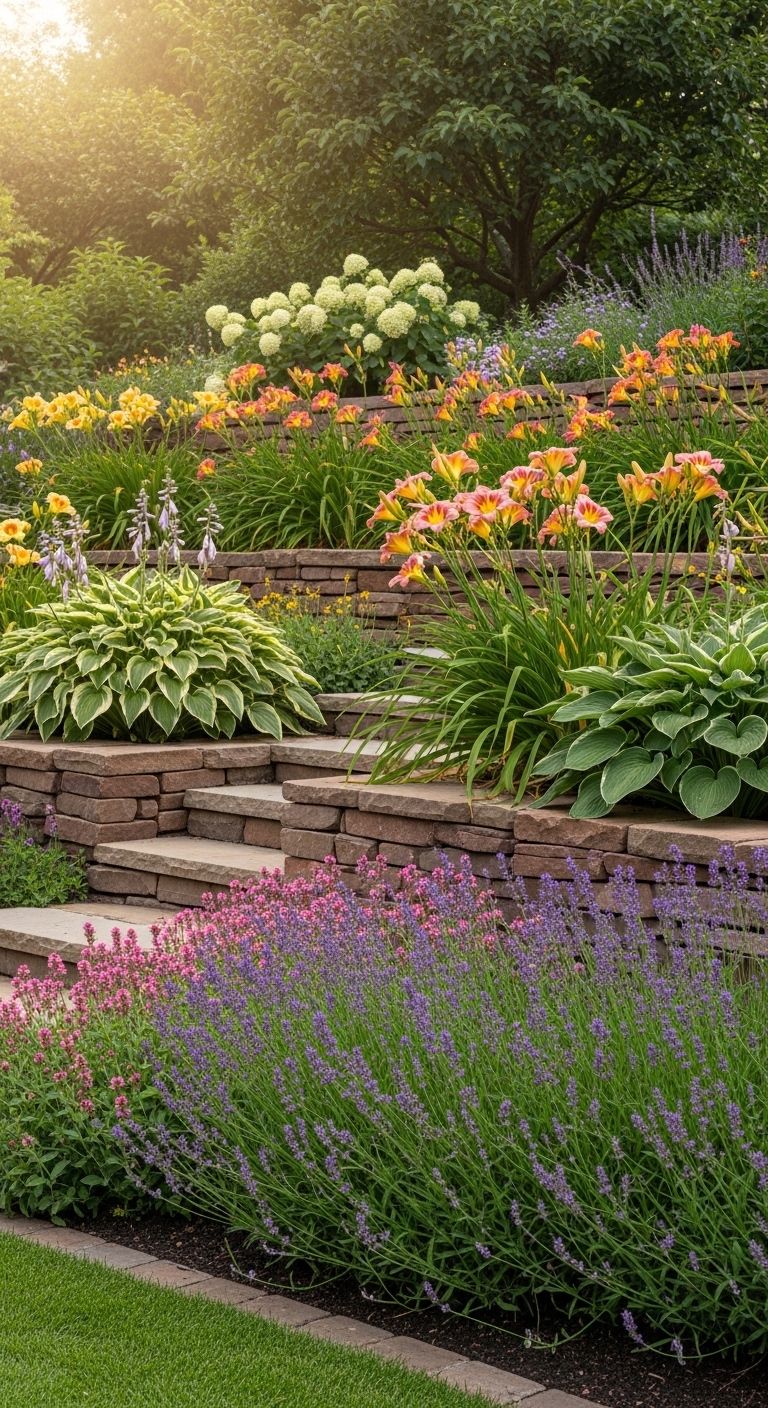
Tiered flower beds are an effective way to manage a sloped yard while showcasing a variety of plants. By creating different levels, you can incorporate a diverse palette of flowers and foliage, ensuring that your garden has color and texture throughout the seasons. Start by defining the tiers with retaining walls made from stone or wood, which can also serve as a natural barrier to soil erosion.
When planting, consider using taller plants at the back of each tier and gradually transitioning to shorter ones at the front. This not only creates a visually appealing display but also maximizes sunlight exposure for all plants. Choose a mix of perennials for longevity and annuals for seasonal variety, incorporating plants like daylilies, hostas, and lavender for a vibrant look.
Don’t forget to include pathways between the tiers for easy access and maintenance. A gravel or stone walkway can add an elegant touch while being functional. With thoughtful planning, your tiered flower beds can transform your sloped yard into a stunning floral display that draws the eye and invites exploration.
2. Incorporate a Rock Garden for Natural Beauty
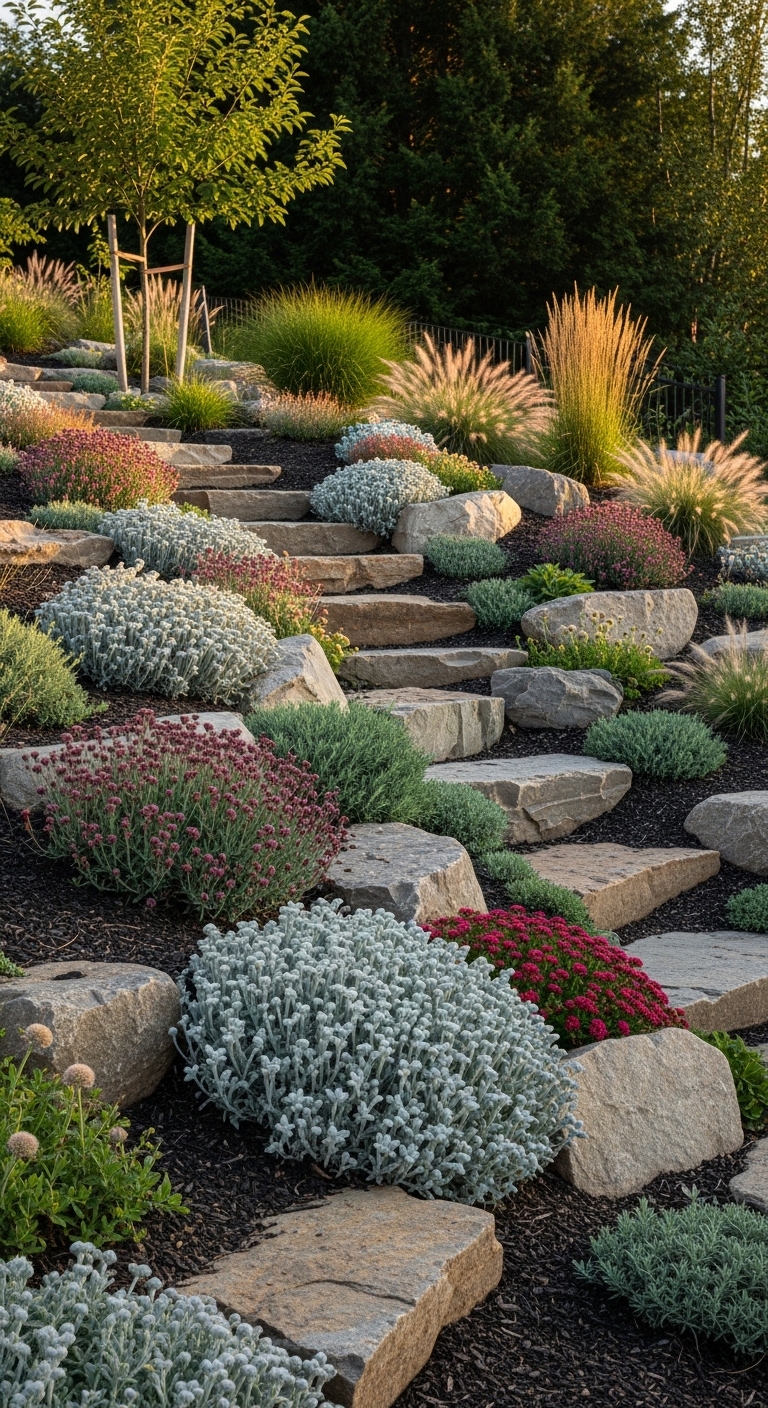
A rock garden is an excellent way to utilize a sloped yard while adding a unique aesthetic element. By combining stones and hardy plants, you can create a low-maintenance landscape that thrives in varied conditions. Choose a variety of rocks, from large boulders to smaller pebbles, to build the foundation of your rock garden, ensuring they are securely placed to avoid shifting.
Select drought-tolerant plants, such as succulents, alpine flowers, and ornamental grasses that can withstand the heat of sun-soaked stones. Planting in clusters will create a more natural look and help the plants retain moisture. Additionally, consider using native species that are well-suited to your local climate, which will minimize maintenance while enhancing biodiversity.
Incorporating pathways through your rock garden can enhance accessibility while inviting exploration. Use gravel or flagstone to create winding paths that add to the overall charm. With the right design, your rock garden can become a serene retreat that harmonizes beautifully with the natural landscape.
3. Design a Serene Water Feature
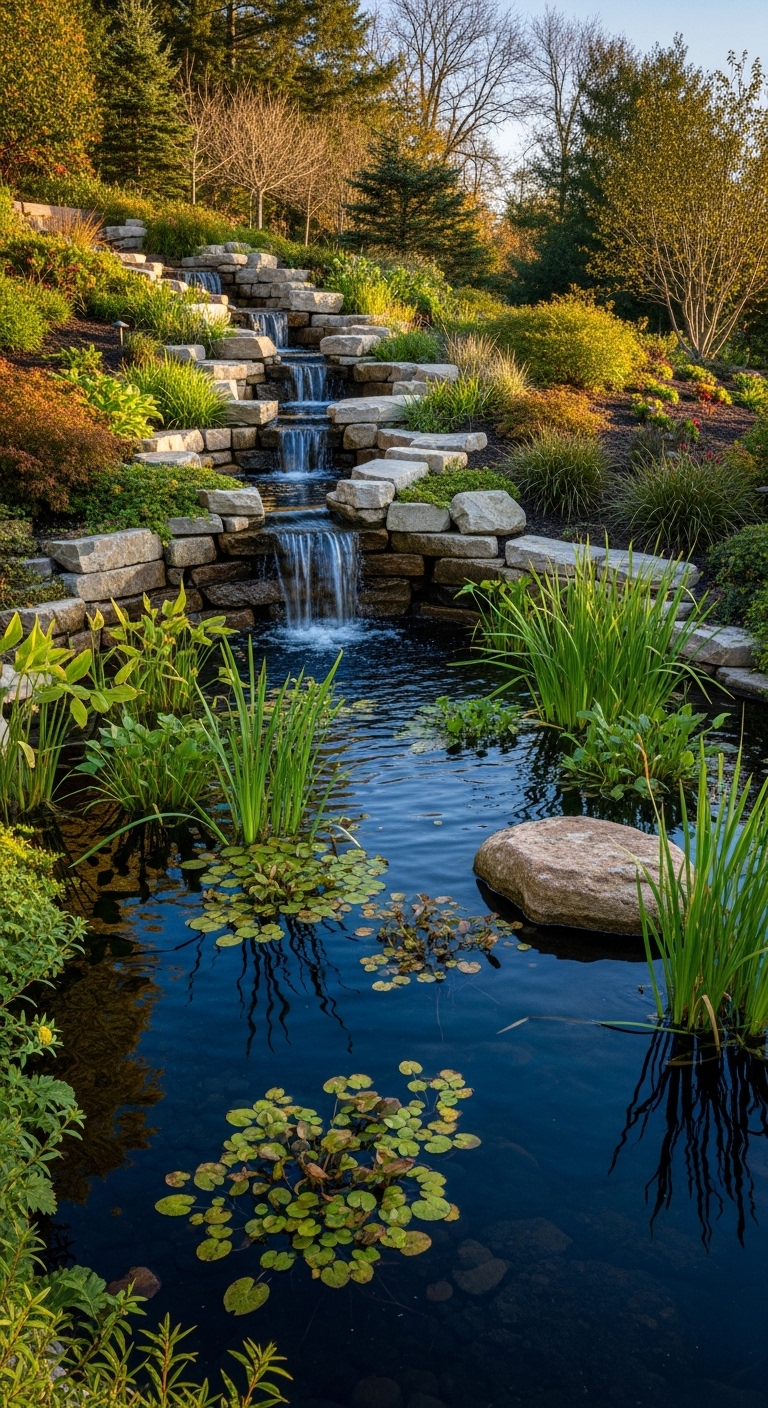
Incorporating a water feature into your sloped yard can create a peaceful ambiance while utilizing the natural contours of the landscape. A cascading fountain or a small pond can be both visually stunning and beneficial for local wildlife. Begin by selecting a location that allows for natural water flow, and consider how you want the feature to interact with the surrounding plants and pathways.
When designing the water feature, think about incorporating natural materials such as stone and gravel, which blend seamlessly with the landscape. Adding aquatic plants like water lilies or ferns can enhance the beauty and health of the water while providing habitats for local creatures. Ensure that the water feature is easily accessible for maintenance without disrupting the overall design of your garden.
Lighting can also play a significant role in showcasing your water feature. Consider adding underwater lights or strategically placed spotlights to highlight the feature during the evening. A well-designed water feature can be the focal point of your sloped yard, providing both tranquility and a stunning visual centerpiece.
4. Establish a Vegetable Garden on the Slope
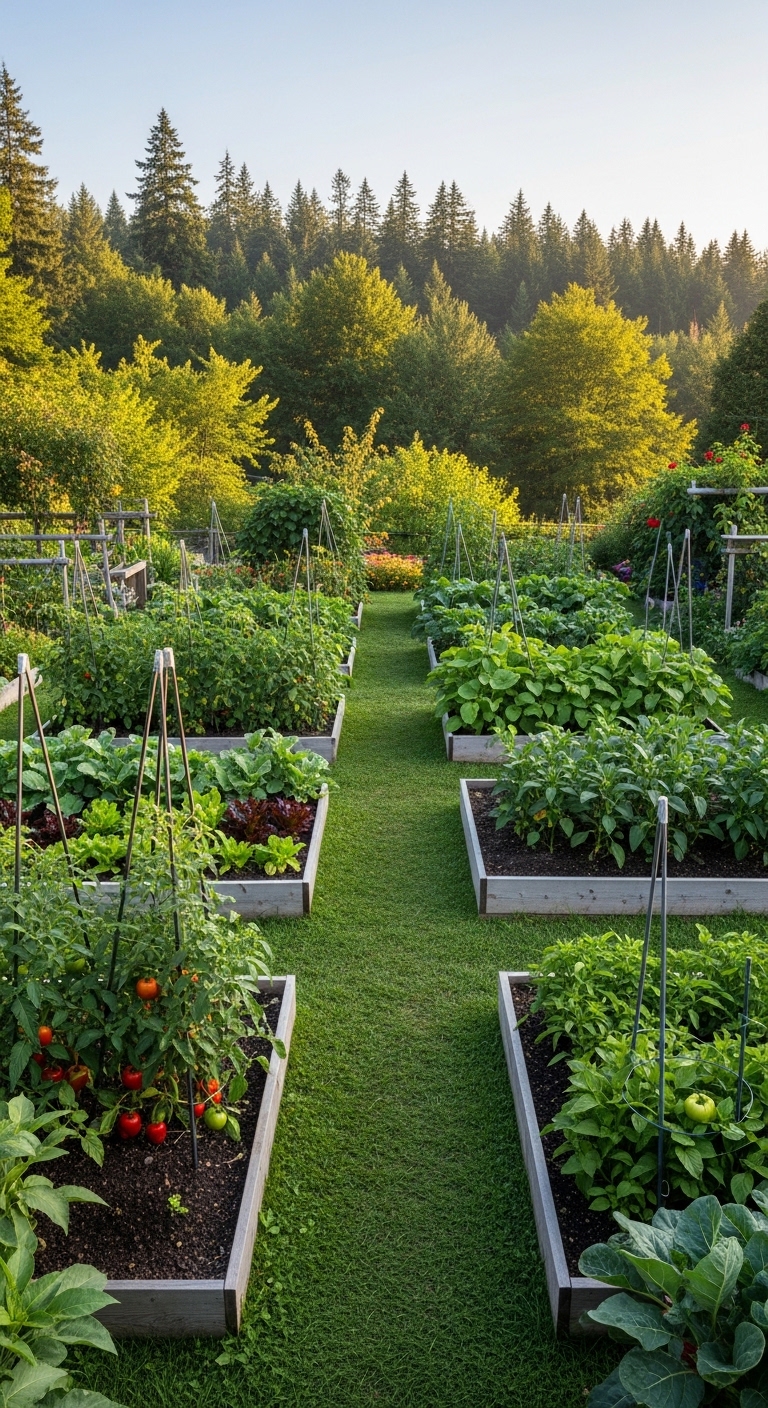
Creating a vegetable garden on a slope can be a rewarding endeavor that not only beautifies your yard but also provides fresh produce. By utilizing raised beds, you can improve drainage and soil conditions, making it easier to grow a variety of vegetables. Start by determining the best location that receives adequate sunlight for your vegetable choices and is easily accessible for maintenance.
Constructing raised beds with materials like wood or stone will create defined planting areas while preventing soil erosion. Layer the beds along the slope, which helps to create a visually appealing layout while maximizing growing space. Choose a mix of vegetables such as tomatoes, peppers, and leafy greens that will thrive in your climate.
Incorporating companion planting techniques can enhance growth and reduce pests. For instance, planting marigolds alongside your vegetables can deter harmful insects. With proper planning and care, your sloped vegetable garden can become a vibrant and productive space that provides sustenance while adding beauty to your landscape.
5. Utilize Terracing for a Dramatic Effect
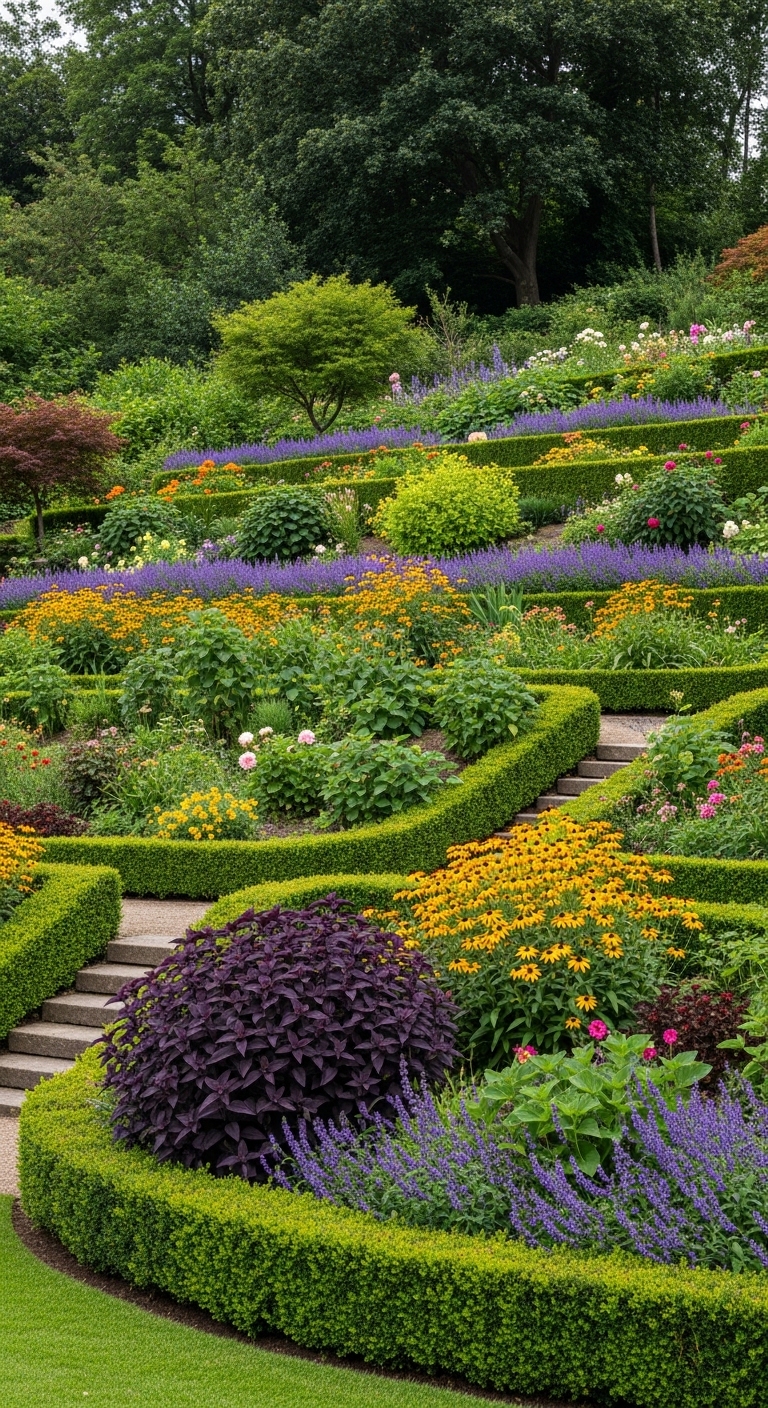
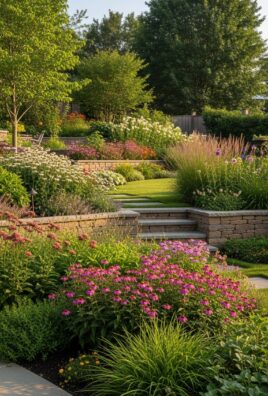
Terracing is a fantastic way to manage a slope while creating visually striking levels in your garden. By constructing terraces, you can create distinct areas for different types of plants, enhancing the overall landscape design. This method not only controls soil erosion but also allows for better irrigation and drainage, making it easier to maintain healthy plants.
When designing your terraces, consider using retaining walls made of stone or timber to create strong boundaries. Each terrace can be adorned with a mix of flowers, shrubs, or even small trees to create depth and interest. Choose plants that complement each other in height and color, such as combining vibrant annuals with low-growing perennials for a stunning visual impact.
Incorporating pathways between the terraces can enhance accessibility and add to the garden’s charm. Use materials like gravel or stepping stones to create a rustic feel. With thoughtful design and plant selection, your terraced garden can become a breathtaking feature that elevates your entire landscape.
6. Incorporate Outdoor Seating for Relaxation
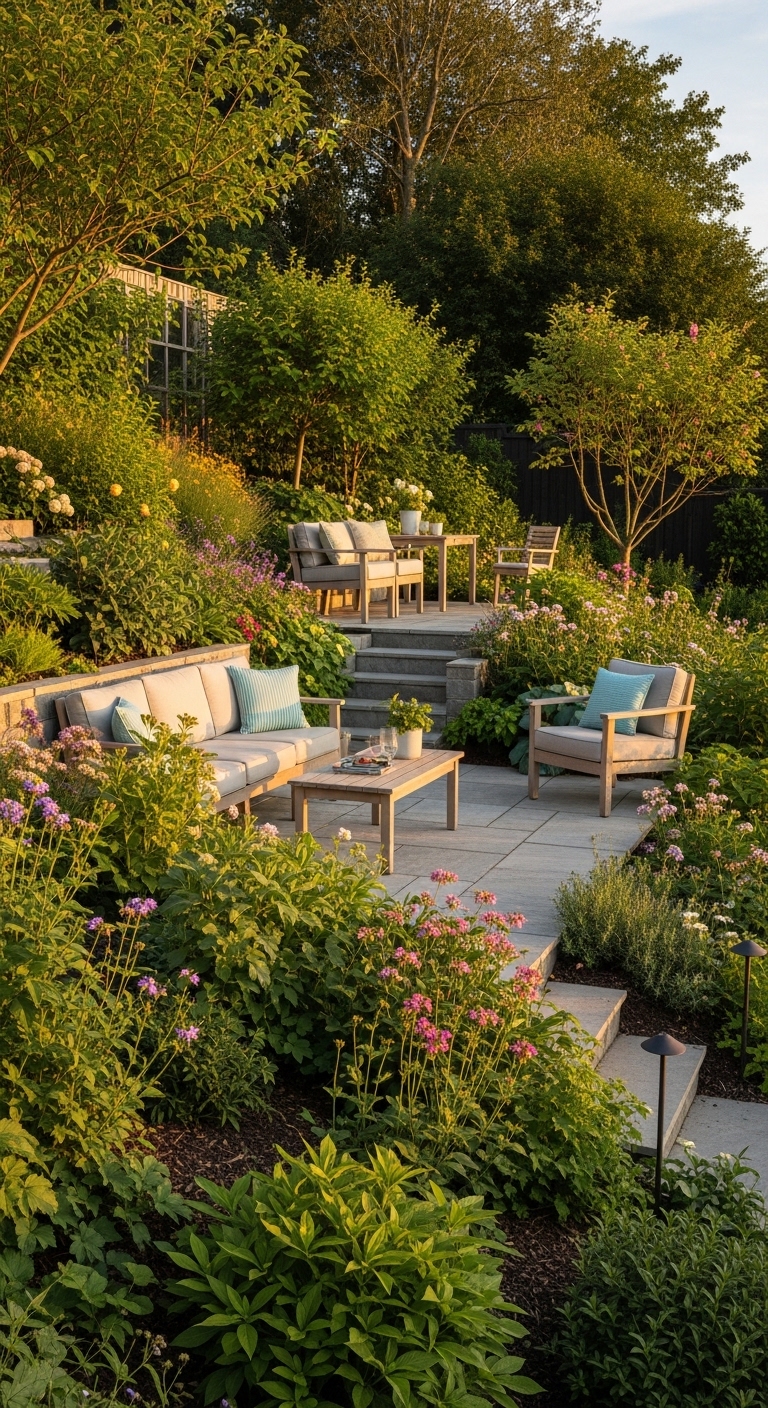
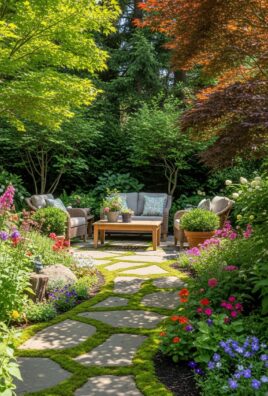
Creating a cozy outdoor seating area on a slope can transform your yard into a serene retreat. By designing a space that takes advantage of the views and natural surroundings, you can enhance your outdoor living experience. Start by selecting a level spot on your slope that offers a great view or a quiet nook for relaxation, ensuring it is easily accessible from other parts of the yard.
Choose comfortable outdoor furniture, such as lounge chairs or a small table, that complements your garden’s aesthetic. Consider using weather-resistant materials to ensure longevity. Surround your seating area with lush plants or a privacy screen of tall grasses or shrubs to create a sense of seclusion.
Adding decorative elements like outdoor rugs, cushions, or lanterns can increase the comfort and charm of the space. This inviting seating area can become a favorite spot for reading, enjoying morning coffee, or hosting friends, adding function and beauty to your sloped garden.
7. Add a Pathway to Enhance Accessibility
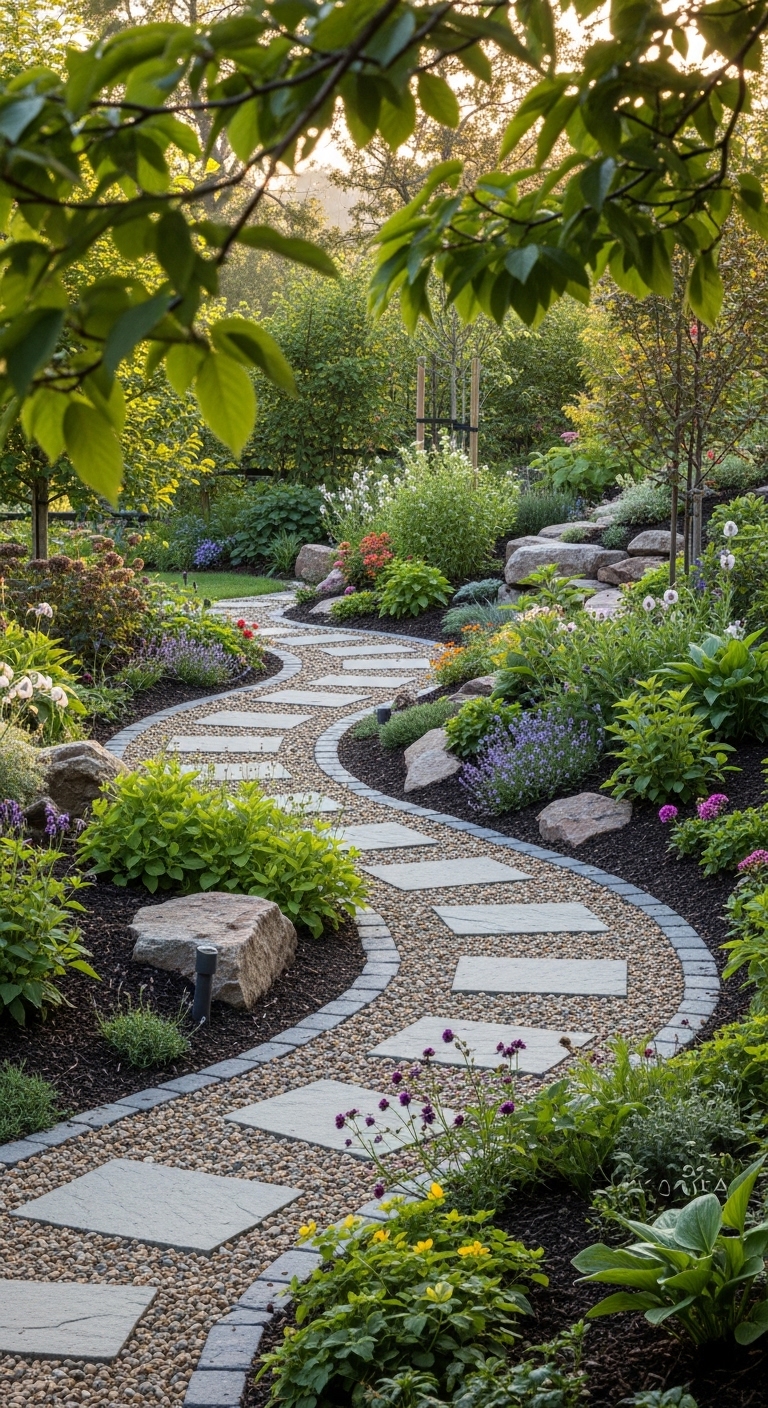
Constructing a pathway through your sloped garden can significantly enhance accessibility while adding visual interest. A well-designed pathway can guide visitors through your garden, drawing attention to various plants and features. Consider using natural materials such as stone, gravel, or wood, which blend beautifully with the outdoor environment.
When planning your pathway, aim for a gentle slope to make it easy to navigate. Curved pathways can create a more organic feel, encouraging exploration and discovery. You can also add stepping stones at intervals to create a more dynamic look while providing a solid footing.
Incorporating surrounding plants along the pathway can enhance the experience, with fragrant flowers or ornamental grasses creating a beautiful frame. By designing a thoughtful and accessible pathway, you can make your sloped yard more inviting while showcasing its unique features.
9. Create a Colorful Rock Garden
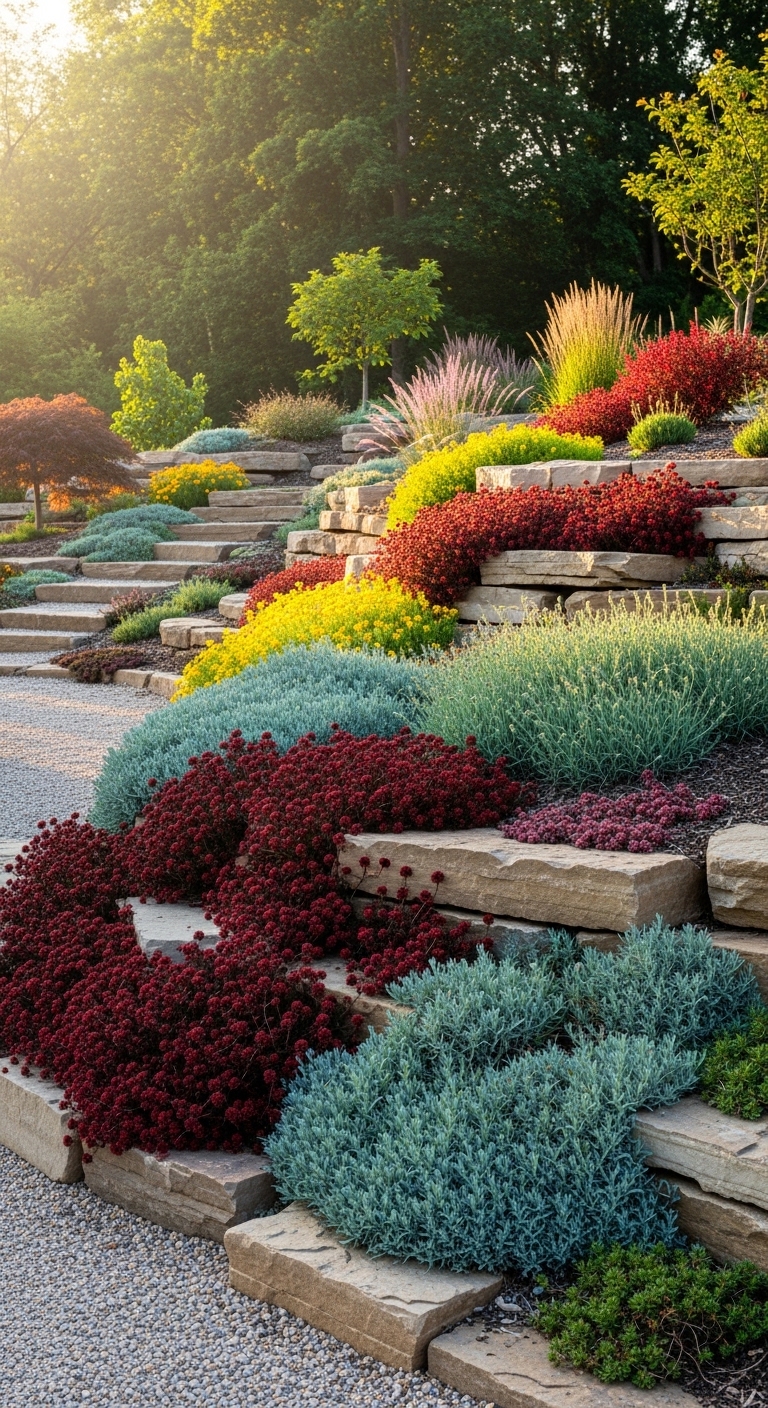
Transforming a sloped yard into a vibrant rock garden is an excellent way to add visual interest and texture. Choose a variety of drought-tolerant plants such as succulents, alpine species, and ornamental grasses that thrive in rocky environments. Incorporate various sized stones and boulders to create naturalistic hills and valleys, which can also help with drainage on the slope.
Layering is key in rock gardening; place larger stones at the base and smaller ones on top to mimic natural formations. Make sure to use high-quality soil that promotes drainage, as many alpine plants prefer well-drained conditions. Colorful gravel paths can enhance the aesthetic appeal while providing a functional way to navigate through the garden.
Consider using native plants to support local wildlife, such as butterflies and bees, which also enhances the ecological aspect of your garden. A rock garden not only adds beauty but also requires minimal maintenance, making it a practical choice for busy homeowners. The combination of textures and colors creates a stunning visual that can be appreciated in any season.
10. Establish a Cozy Fire Pit Area
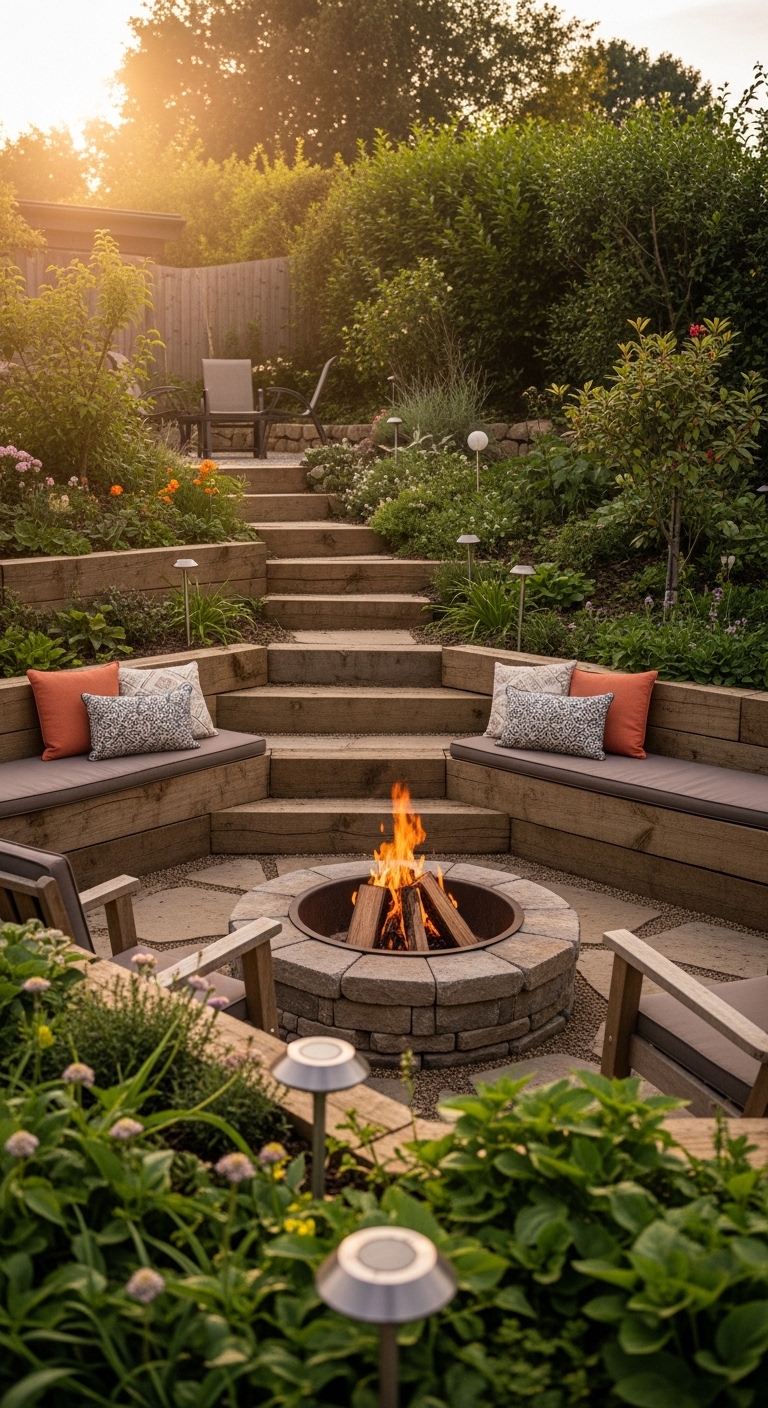
A sloped yard can be perfect for creating a cozy fire pit area, turning your garden into a year-round gathering spot. Design the space with terraced seating using stone or timber to create a welcoming environment. Surround the fire pit with comfortable outdoor furniture such as weather-resistant chairs and warm textiles, allowing you to enjoy evenings by the fire amid the beauty of your garden.
Selecting a fire pit that complements the landscape is vital. Choose from options like a rustic stone pit or a sleek modern design, depending on your aesthetic preference. Surround the fire pit with gravel or pavers for added safety and to prevent grass from catching fire. Lighting is also essential; consider solar lights or lanterns to create a magical ambiance when the sun goes down.
Adding fragrant plants like lavender and rosemary nearby can enhance the sensory experience, providing delightful scents as you relax by the fire. This outdoor space becomes not just a garden feature, but an integral part of your lifestyle, offering warmth and connection with family and friends.
11. Implement a Vertical Garden
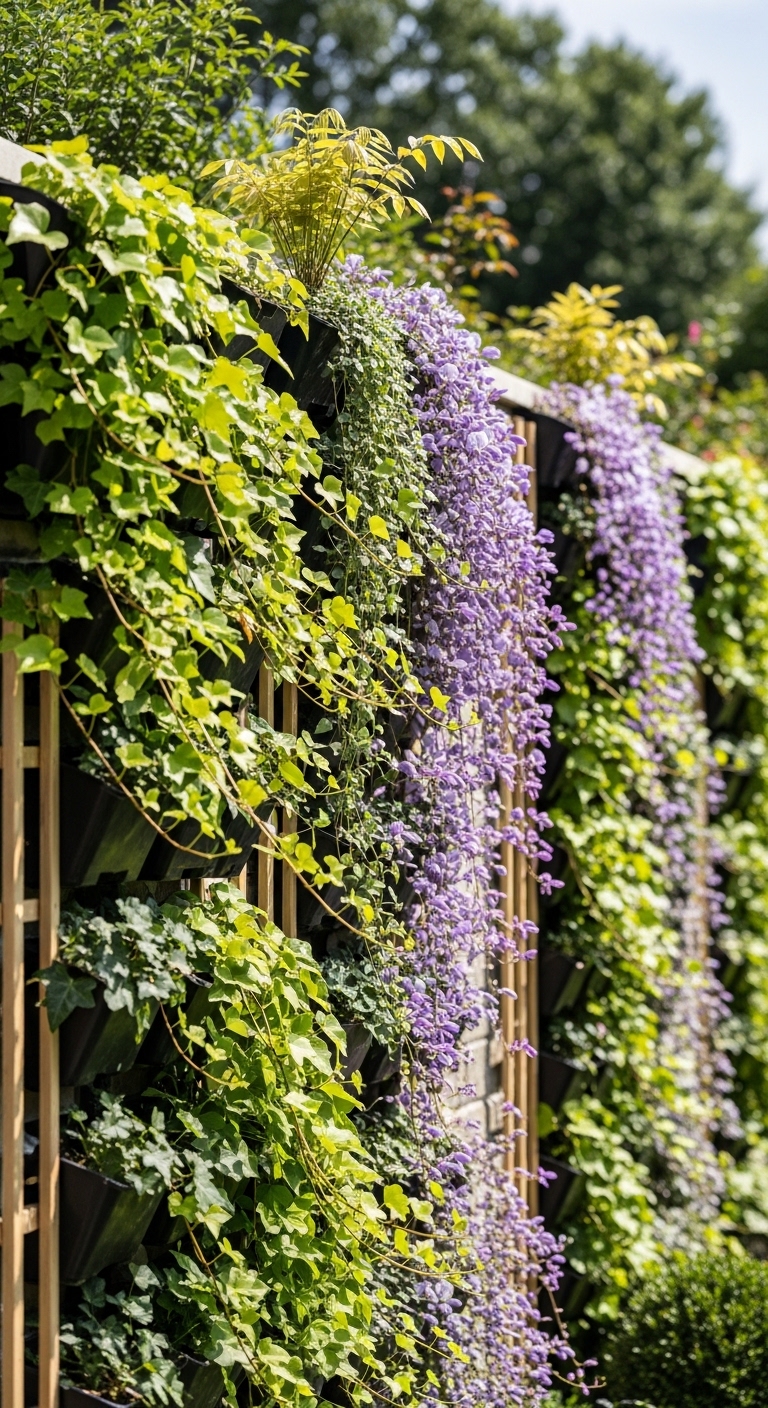
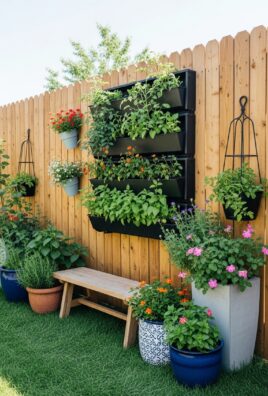
Maximize your sloped yard by implementing a vertical garden, which not only optimizes space but also adds a striking visual element. Vertical gardening can be achieved using wall-mounted planters, trellises, or repurposed pallets, creating a lush green backdrop against the slope. Opt for climbing plants like ivy, wisteria, or sweet peas, which will thrive and cascade down the height of the structure.
Ensure that you choose plants suited for vertical gardening, as they typically need to be lightweight and capable of climbing. Incorporating herbs such as basil or mint can provide both beauty and function, as they can enhance your outdoor cooking. Vertical gardens are particularly effective in small or uneven spaces, providing a lush look without taking up much ground area.
Remember to install a proper irrigation system to keep your vertical garden healthy and hydrated, as water drainage is crucial. The result is an eye-catching, vibrant installation that will transform your slope into a stunning focal point, providing beauty and functionality in your outdoor space.
12. Install a Charming Pergola
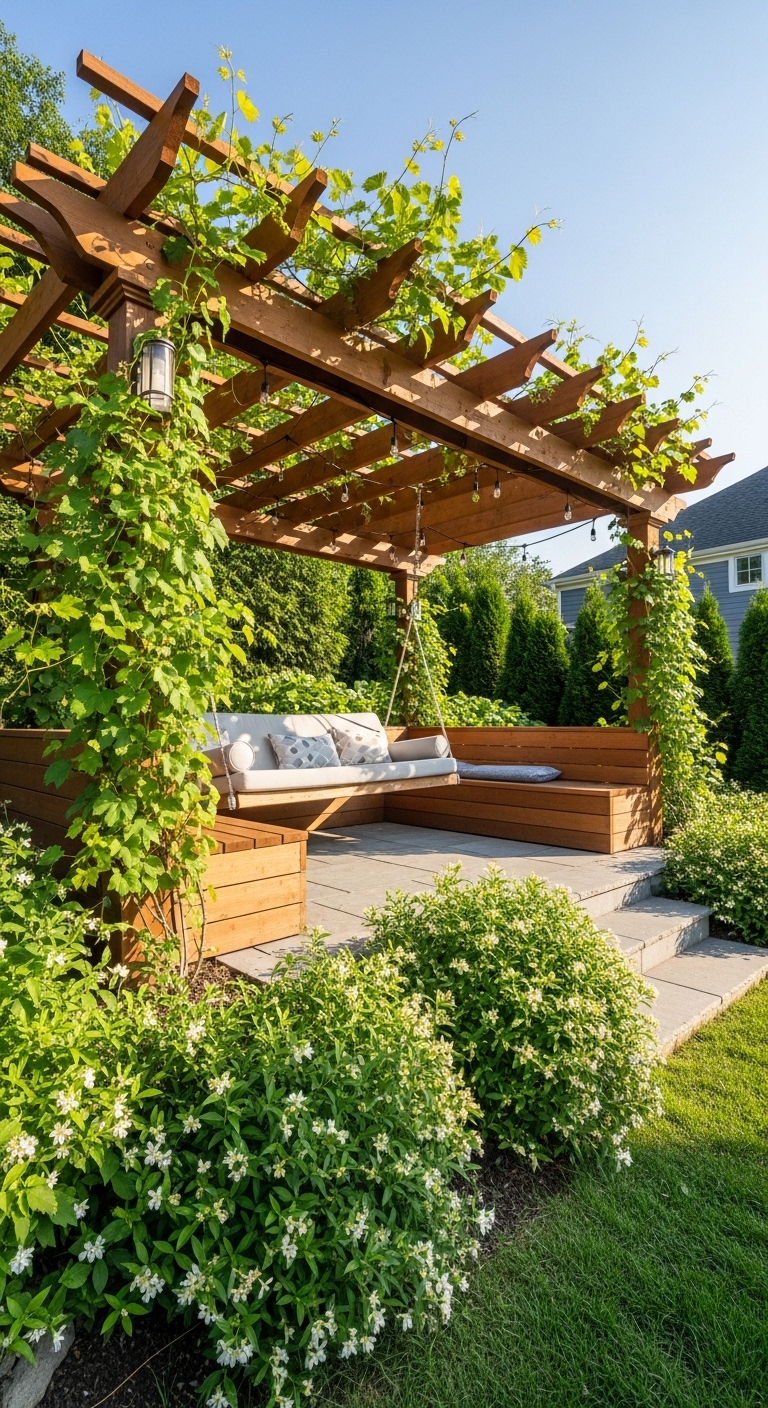
Adding a pergola to your sloped yard not only creates a visually appealing structure but also provides a shaded area to enjoy your garden. Position the pergola at the top or middle of the slope to serve as a focal point and vantage point for enjoying the view. Adorn it with climbing plants like grapevines or jasmine to enhance its charm and create a natural canopy.
When choosing materials, consider wood or composite materials that can withstand the elements while complementing your garden’s style. Incorporate built-in benches or a swinging daybed to create an inviting space for relaxation and socializing. Adding outdoor curtains or shades can provide additional privacy and protection from the sun.
A pergola can be a perfect spot for outdoor dining or lounging, making it an ideal place for gatherings. Enhance this area with string lights or lanterns for evening ambiance, turning it into a magical escape under the stars. This addition not only elevates your garden’s aesthetic but creates a functional outdoor room that you’ll cherish.
13. Incorporate Edible Landscaping
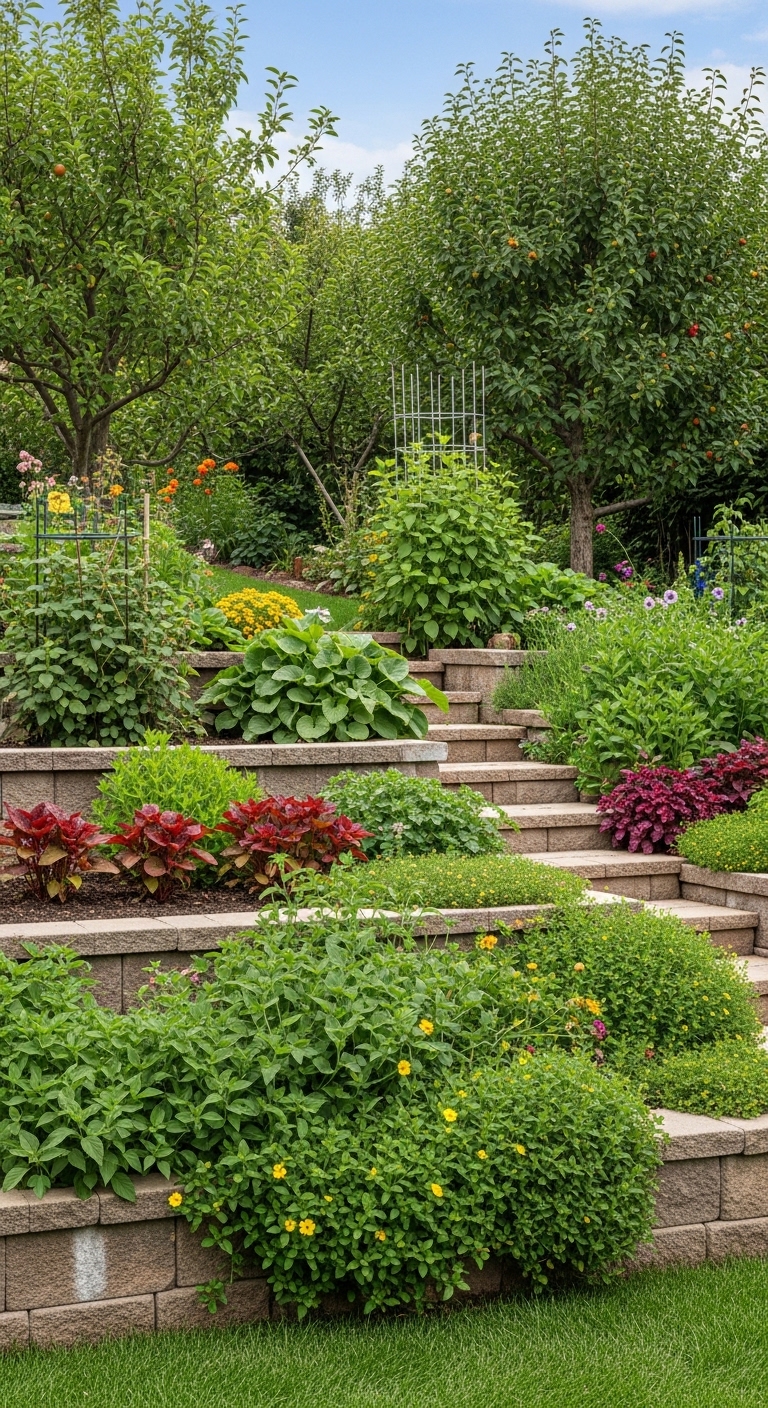
Transform your sloped yard into a productive oasis by incorporating edible landscaping, blending beauty with functionality. Choose a variety of fruit-bearing plants, herbs, and vegetables that can thrive on a slope while providing fresh produce. Examples include berry bushes, fruit trees, and vibrant herb gardens that can be both decorative and delicious.
Create tiered beds with retaining walls to manage soil erosion and provide flat areas for planting. This setup will not only look appealing but also ensure that your edible plants receive adequate sunlight. Mixing ornamental plants with edibles like colorful Swiss chard or marigolds can create an attractive display that enhances the overall look of your garden while serving a purpose.
Consider companion planting strategies to maximize yield and health of your plants. For instance, planting garlic among your roses can improve their growth and deter pests. By cultivating an edible landscape, you will enjoy the dual benefits of a beautiful garden and a harvest of fresh ingredients, bringing a sense of satisfaction to your outdoor living experience.
Frequently Asked Questions
What plants are best for a sloped garden?
When selecting plants for a sloped garden, it’s important to choose species that are both hardy and capable of preventing erosion. Native plants tend to adapt best to local conditions, making them ideal for such environments. Consider incorporating a mix of ground covers, shrubs, and perennials that thrive in your specific climate.
Drought-tolerant options like sedums, creeping thyme, or ornamental grasses can be particularly effective in managing soil erosion while adding visual interest. Additionally, layering plants by height can create a beautiful, cascading effect that enhances the natural slope of your garden. Always consider the sun and shade patterns in your yard to ensure optimal growth for your selected plants.
How can I prevent soil erosion in my sloped yard?
Soil erosion can be a significant issue in sloped yards, but there are several strategies to prevent it. First, consider planting ground covers or establishing a dense planting scheme, as plants help stabilize the soil with their root systems. Additionally, using terraces or raised beds can help manage water runoff and reduce erosion effectively.
Incorporating mulch or rocks along the slope can also absorb water and slow down its flow, further minimizing erosion. Regular maintenance, including checking for any signs of erosion damage and replenishing mulch layers, is essential to keep your slope healthy and prevent soil loss.
What hardscaping features can I add to a sloped garden?
Hardscaping elements can be integral to the design of a sloped garden, providing structure and functionality. Features like retaining walls, terraces, and pathways can help manage the slope while adding aesthetic appeal. Retaining walls made from natural stone or timber can create defined planting areas and prevent soil erosion.
Additionally, incorporating features like steps or terraces can create usable space for planting or seating. Decorative elements such as benches, arbors, or pergolas can further enhance the usability and beauty of your sloped yard, creating a charming outdoor oasis.
Can I grow vegetables in a sloped garden?
Absolutely, a sloped garden can be an excellent location for growing vegetables. By utilizing raised beds or terraced gardening, you can create level areas that are easier to maintain. Raised beds improve drainage and soil conditions, making it easier to cultivate a variety of vegetables.
When planning a vegetable garden on a slope, consider the sun exposure and accessibility for watering and harvesting. Choose a mix of vegetables that thrive in your climate and ensure companion planting to maximize growth and pest control. With the right design, your sloped yard can yield a bountiful harvest while providing a beautiful landscape.
How do I create a level area on a slope for planting?
Creating a level area for planting on a slope can be achieved through various methods, such as terracing or building raised beds. Terracing involves cutting steps into the slope and creating flat planting surfaces, which can improve drainage and make maintenance easier.
Alternatively, raised beds can be constructed using timber, stone, or concrete blocks to create defined, flat areas for planting. Ensure that these structures are securely anchored to prevent shifting. These methods not only provide level areas for planting but also enhance the overall aesthetic of your sloped garden, allowing for a beautiful and functional landscape.
Transforming a sloped yard into a captivating garden space is an exciting endeavor that can significantly enhance your outdoor living experience. By implementing these 13 creative ideas, you can embrace the natural contours of your landscape while creating functional and beautiful spaces. Whether you choose to incorporate tiered flower beds, serene water features, or inviting outdoor seating areas, each element contributes to a cohesive design that showcases your personal style.
As you embark on this gardening journey, remember to consider the unique characteristics of your slope and choose plants and materials that thrive in those conditions. With patience and creativity, your sloped yard can become a stunning showstopper that brings joy and tranquility to your home. Start planning your transformation today and watch your garden flourish.
Leave a Comment